
Is Gold Jewelry a Good Investment? Buyer’s Guide for 2025
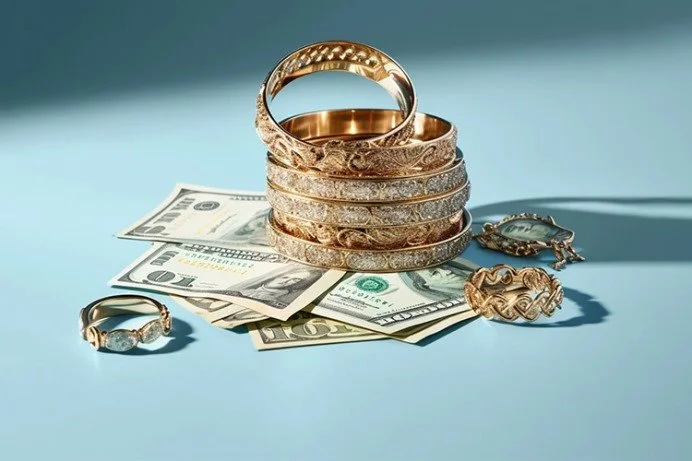
For centuries, gold has symbolized wealth, security, and timeless value. But in today's uncertain economic climate - with record global debt, inflation pressures, and market volatility - investors are asking a very practical question: Is gold jewelry a good investment?
The short answer: Yes, gold jewelry can be an excellent investment and a good idea, but only if it's pure 24K investment-grade gold from a trusted source. Unfortunately, most jewelry in the U.S. market is overpriced, alloyed, and diluted, meaning consumers pay steep markups for pieces that do not qualify as true investment assets.
At YinCity Gold, we specialize in pure 24K gold jewelry, crafted to LBMA standards with a transparent 30-55% markup - far lower than the 400%-plus markups charged by major retailers like Tiffany, Zales, or Walmart. Here's what makes 24K gold jewelry a unique investment, how to avoid costly traps, and why it may be one of the smartest long-term moves in 2025 and beyond.
KEY TAKEAWAYS
- Only 24K (99.5% pure) qualifies as investment-grade gold.
- Transparent markups (30–55%) are essential - anything higher erodes returns.
- U.S. jewelers hide weight and karat details, while in Asia/Middle East, gold is sold by weight.
- Gold jewelry = wearable wealth - a tangible, portable, long-term store of value.
- Gold could reach $10,000–$20,000/oz within the next decade.
- Avoid alloys and diamonds—they're fashion, not investments.
- YinCity Gold = transparency, purity, and fair pricing.
Is Gold Jewelry a Good Investment?
In 2025, the gold case is stronger than ever. Gold prices surged 18.5% between March and May 2025 on tariff-driven uncertainty, and experts see long-term appreciation as de-dollarization and central bank buying intensify.
But not all "gold" jewelry is created equal.
Most jewelry sold in the U.S. is alloyed—mixed with cheap metals like nickel or copper—and sold with 200–300% markups, similar to clothing retail. This means you're paying luxury prices for fashion, not investment.
The Cultural Divide: Asia vs. U.S.
In Asia and the Middle East, mostly consumers buy gold jewelry by weight because they know they're buying gold as an asset.
In the U.S., retailers rarely show the weight of gold pieces - only the size and karat to hide the markup. That's why genuine investors must know how much gold they're getting, at what purity, and at what markup.
You Might Also Like: What Is 24 Karat Gold?
Why People Ask: Is Gold Jewelry a Good Investment?
As the U.S. dollar weakens and traditional assets like bonds lose appeal, how to store value tangibly? 24K gold jewelry bridges the gap between investment and lifestyle. It's wealth you can wear, transport, and pass down through generations.
Why you should invest in 24K bullion-grade pure gold jewelry:
Bullion-grade gold pieces always appreciate: With gold setting new records, 24K jewelry buyers want functional investments.
Macroeconomic instability protection: Ongoing conflicts in Ukraine and the Middle East, weakening U.S. dollar, and soaring debt push investors toward safe-haven assets like gold.
Fashion vs. investment: Most U.S. consumers don't realize that buying 14K or 18K gold jewelry is not an investment but a fashion expense. In comparison, 24K jewelry offers the dual benefit of beauty + portfolio diversification.
What Makes 24K Gold Jewelry Different from Other Gold Investments?
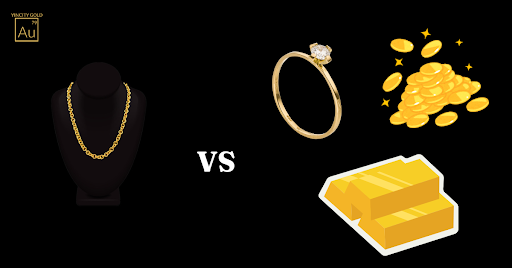
24K vs. Bars and Coins
Bars and coins are excellent stores of value but lack utility. Jewelry, on the other hand, is wearable wealth.
During the 1933 U.S. gold confiscation (Executive Order 6102), bullion was seized, but gold jewelry was exempt. In times of uncertainty or de-dollarization, that distinction matters. 24K jewelry offers portability, privacy, and functionality unmatched by any other gold format.
24K vs. Alloyed Jewelry (10K, 14K, 18K)
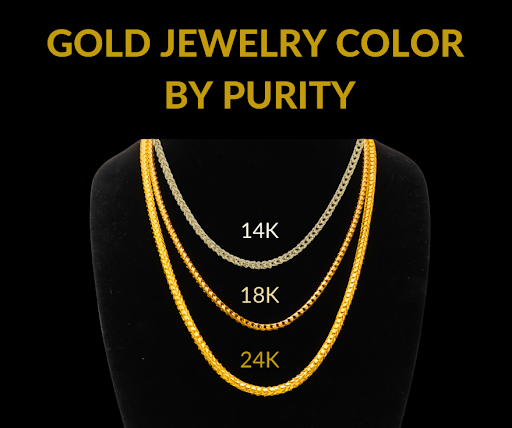
Alloyed gold (10K–18K) contains less than 75% gold and is heavily diluted with base metals. It's durable for fashion, but a poor investment, especially with 200–300% retail markups. Until you experience pure 24K gold, nothing compares to its weight, color, and richness.
Is Silver Jewelry a Good Investment?
No. Silver jewelry often carries even higher markups because jewelers must charge more to profit from its lower base value. It's decorative, not an investment.
Is Scrap Gold Jewelry a Good Investment?
Only for professionals. Serious gold investors will sometimes try to buy or "Scrap" Gold Jewelry. Buying scrap gold requires assay testing, refining, and negotiation—not realistic and feasible for average consumers. For serious investors, verified 24K jewelry is far superior.
A Sensory Experience Unlike Alloys
24K gold feels dense, radiant, and alive. It's pure, hypoallergenic, and oxidation-free. Once you wear it, you'll understand why ancient civilizations and modern investors alike treasure it. Owners of pure 24K rarely go back to alloys after experiencing its true density and beauty.
Want To Know The Jewelry's Actual Gold Value?
Use our calculator below to calculate the markup and value of your gold jewelry:
Purity And Authenticity Checks You Should Know
Investment-grade: According to LBMA standards, 99.5% purity is the benchmark. Only 24K qualifies.
XRF testing: Ask for an X-ray fluorescence (XRF) report confirming actual purity. We, YinCity Gold, offer XRF + third-party appraisal services at nominal fees to certify authenticity for clients.
Want A Custom-Crafted 24K Gold Jewelry? Contact Us Now!
The Market Drivers Behind Gold's Investment Power in 2025
Gold's surge isn't random - it's structural, driven by:
Central bank accumulation: Over 1,000 tonnes added annually since 2022, led by China, India, and Poland.
Fed rate cuts: Lower real interest rates increase gold demand over bonds and cash.
Inflation hedge: Rising U.S. debts and deficits weaken the dollar, boosting gold demand.
BRICS + de-dollarization: Nations are reducing reliance on USD reserves, increasing long-term structural demand for physical gold.
Scarcity factor: Only ~216,265 metric tons exist globally - it cannot be printed.
For context: From the 1970s stagflation, gold returned +2,329%, proving its unmatched ability to preserve wealth during uncertainty.
Pros and Cons of Investing in 24K Pure Gold Jewelry
Pros:
Tangible, wearable, portable wealth (unlike bars/coins locked away).
Long-lasting beauty - retains a deep golden hue for decades.
Resale value is based on spot price + craftsmanship premium.
Historically safer than many assets in crises.
Cons:
Few U.S. retailers sell true 24K jewelry. Always verify purity and keep markups under 50% unless it's handcrafted by a master goldsmith.
How to Maximize Returns on 24K Gold Jewelry Investments
Buy on dips: Accumulate when gold corrects by 10–15%.
Hold long term: 10 years or more captures gold's full cycle.
Keep markup ≤50%: YinCity Gold's markups range 30–55%, depending on design and labor.
Choose simpler designs: Anchor, Cuban, or Open Link chains offer lower labor markups.
Money Chain Option: YinCity's "money chain" is crafted for investors, a minimalist 24K design with just 30% markup.
Portfolio Strategy
Allocate 10–25% of your portfolio to physical gold.
50% of that should ideally be 24K jewelry, the most functional form of gold ownership. Unlike bars or coins, jewelry is wearable, transportable, and discreet. You can travel with $50,000 in gold jewelry; try doing that with gold bars through customs. 24K pure gold jewelry is not only an investment - it's a sovereign asset class that transcends borders.
See The 2024 U.S. Price Analysis And Markup Comparison Below
| JEWELER | INDUSTRY CATEGORY | ITEM | ITEM PRICE | GOLD VALUE (@ $2350 OZ) |
MARK-UP | TYPE | LINK |
|---|---|---|---|---|---|---|---|
| Yincity Gold | GOLD CUSTOM INVESTMENT JEWELRY HANDMADE IN U.S. | 24K CUSTOM HANDMADE CUBAN CHAIN WITH ID TAG 25 INCH 311 GRAMS | $36,210 | $25,500 | 42% | SOLID | YINCITYGOLD.COM |
| TIFFANY & CO. | LUXURY RETAIL | 18K HARDWARE LINK BRACELET 35.38G (6.53 GRAMS ACTUAL GOLD) | $12,500 | $2,175 | 475% | HOLLOW | TIFFANY.COM |
| Cartier | LUXURY RETAIL | 18K SANTOS CHAIN 22 INCH 55.25 GRAMS (14.14 ACTUAL GOLD) | $8,500 | $3,398 | 150% | SOLID | CARTIER.COM |
| DAVID YURMAN | LUXURY RETAIL | 18K ROSE GOLD CUBAN 26 INCH 125.52 GRAMS (91.4 GRAMS ACTUAL GOLD) | $37,000 | $7,719 | 379% | SOLID | DAVIDYURMAN.COM |
| ZALES | RETAIL (MALL) | 14K GOLD CUBAN 26” ITEM #20293610 WEIGHT 75.60 | $15,499 | $3,613 | 327% | HOLLOW | ZALES.COM |
| KAY | RETAIL (MALL) | 14K CUBAN 22” 96.13 GRAMS (56.04 GRAMS ACTUAL GOLD) | $25,999 | $4,595 | 466% | HOLLOW | KAY.COM |
| Ben Bridge | RETAIL | 14K 24” FORZATA CHAIN 6.64 GRAMS (3.87 REAL GRAMS ACTUAL GOLD) | $6,999 | $3,173 | 121% | SOLID | BENBRIDGE.COM |
| Fred Meyer | RETAIL | 14K 26” INCH FRANCO CHAIN 176 GRAMS (102.6 ACTUAL GOLD) | $21,900 | $8,413 | 160% | SOLID | FREDMEYERJEWELERS |
| Shane Co. | RETAIL (MALL) | 14K FRANCO CHAIN 51.9 GRAMS (30.25 PURE GOLD) | $6,450 | $2,480 | 160% | HOLLOW | SHANECO.COM |
| Walmart | DEPARTMENT RETAIL | 14K CUBAN 24” 106.14 GRAMS (61.88 GRAMS) | $12,259 | $5,074 | 142% | SOLID | WALMART.COM |
| Nordstrom | DEPARTMENT RETAIL | 18K GOLD CUFF BRACELET 33 GRAMS (24.75 ACTUAL GOLD) | $10,450 | $2,029 | 415% | SOLID | NORDSTROM |
| Kohl’s | DEPARTMENT RETAIL | 14K GOLD 24” PAVE CHAIN 52.5 GRAMS (30.60 ACTUAL GOLD) | $20,000 | $2,509 | 697% | HOLLOW | KOHLS.COM |
| Amazon | AMERICA’S BIGGEST ONLINE RETAILER | JEWELRY PLUS 26” CUBAN 101.49 (59.17 ACTUAL GOLD) | $13,175 | $4,852 | 172% | SOLID | AMAZON.COM |
| Jaxxon | ONLINE | 14K 24” FRANCO 27 GRAMS (15.75 ACTUAL) | $2,499 | $1,291 | 94% | SOLID | JAXXON.COM |
| Helzberg | RETAIL | 14K 24” CUBAN 34.50 GRAMS (20.11 ACTUAL GOLD) | $5,999 | $1,649 | 264% | HOLLOW | HELZBERG.COM |
| Jared | RETAIL | 24K 24” BARREL CHAIN 77.99G GOLD | $18,000 | $6,395 | 181% | HOLLOW | JARED.COM |
| Costco | RETAIL DISCOUNT | 14K 24” FANCY CURB NECKLACE 47.3 GRAMS (27.6 ACTUAL GOLD) | $3,500 | $2,262 | 55% | SOLID | COSTCO.COM |
| Gurhan | ONLINE | 24K 7.5 INCH GOLD BALL BRACELET 30.32 GRAMS GOLD | $7,950 | $2,486 | 205% | SOLID | GURHAN.COM |
Frequently Asked Questions About Gold Jewelry Investments
-
Yes. It's the only jewelry format that meets LBMA purity standards and retains spot value.
-
24K tracks global gold prices and historically outperforms during crises or inflation.
-
Analysts and institutional projections suggest $10,000–$20,000 per ounce by 2035.
-
Buy 24K only, ensure markup transparency (≤50%), accumulate during dips, and hold for a decade or longer.
Final Thoughts - Is Gold Jewelry Worth Buying in 2025?
Absolutely - if it's pure 24K and priced transparently. When you buy alloyed jewelry from U.S. retail giants with 200–300% markups, you're buying fashion, not gold. When you buy 24K gold jewelry from YinCity Gold, you're buying portable wealth, aesthetic value, and financial resilience.
At YinCity Gold, we stand for:
Transparency (30–55% markup)
Purity (24K only)
Education and empowerment for the modern gold investor
Gold jewelry is more than an adornment. It's wealth you can wear, pass down, and trust forever.